


DEXPRO is an interactive visual analytics tool for exploring how product design and CNC machining processes relate to energy consumption. It brings together 3D part geometry, machining instructions, toolpaths, and machine measurements in one coordinated interface. Users can analyze the machining process, identify the most energy-intensive operations, and examine how individual manufacturing features contribute to overall energy consumption when producing a specific part design. DEXPRO also supports what-if exploration, allowing selected design features to be modified and their estimated impact on energy use to be compared directly, hence making the design process resource-consumption aware in a responsive manner, faster than the traditional design-program-produce workflow.
Modern CNC manufacturing connects several digital steps, from product design to machine execution. A part is first described through a computer-aided design (CAD) model, while computer-aided manufacturing (CAM) software translates the design into machining instructions in the form of a numerical control (NC) program. During production, the CNC machine generates additional data about its actual behavior, such as power consumption, spindle activity, and axis movements. Since both the geometry of a part and the way it is machined affect the energy required for production, understanding these relationships is essential for more resource-aware manufacturing. Yet these heterogeneous data sources are rarely explored together in a unified way, making it difficult to trace energy demand back to individual design decisions and machining operations.
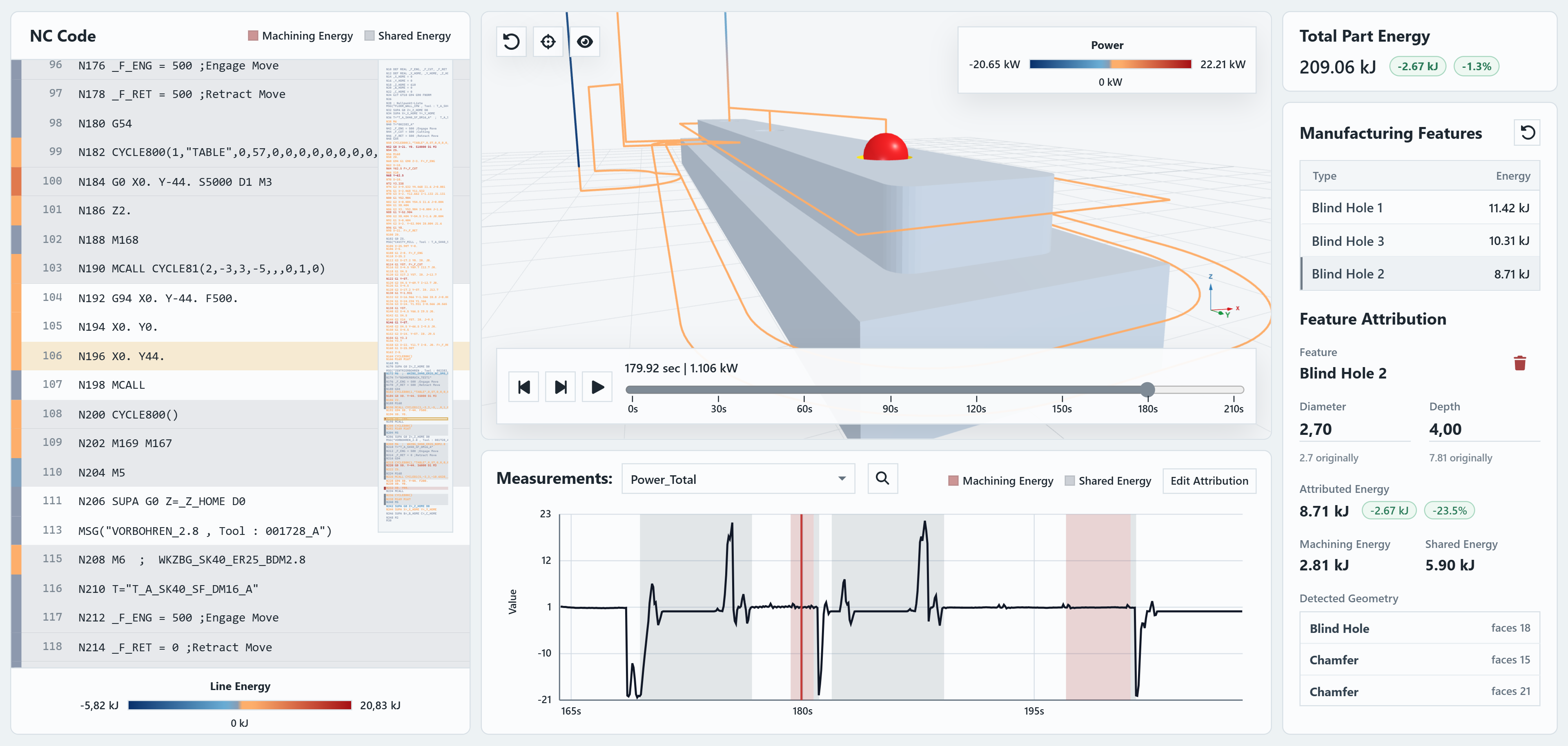
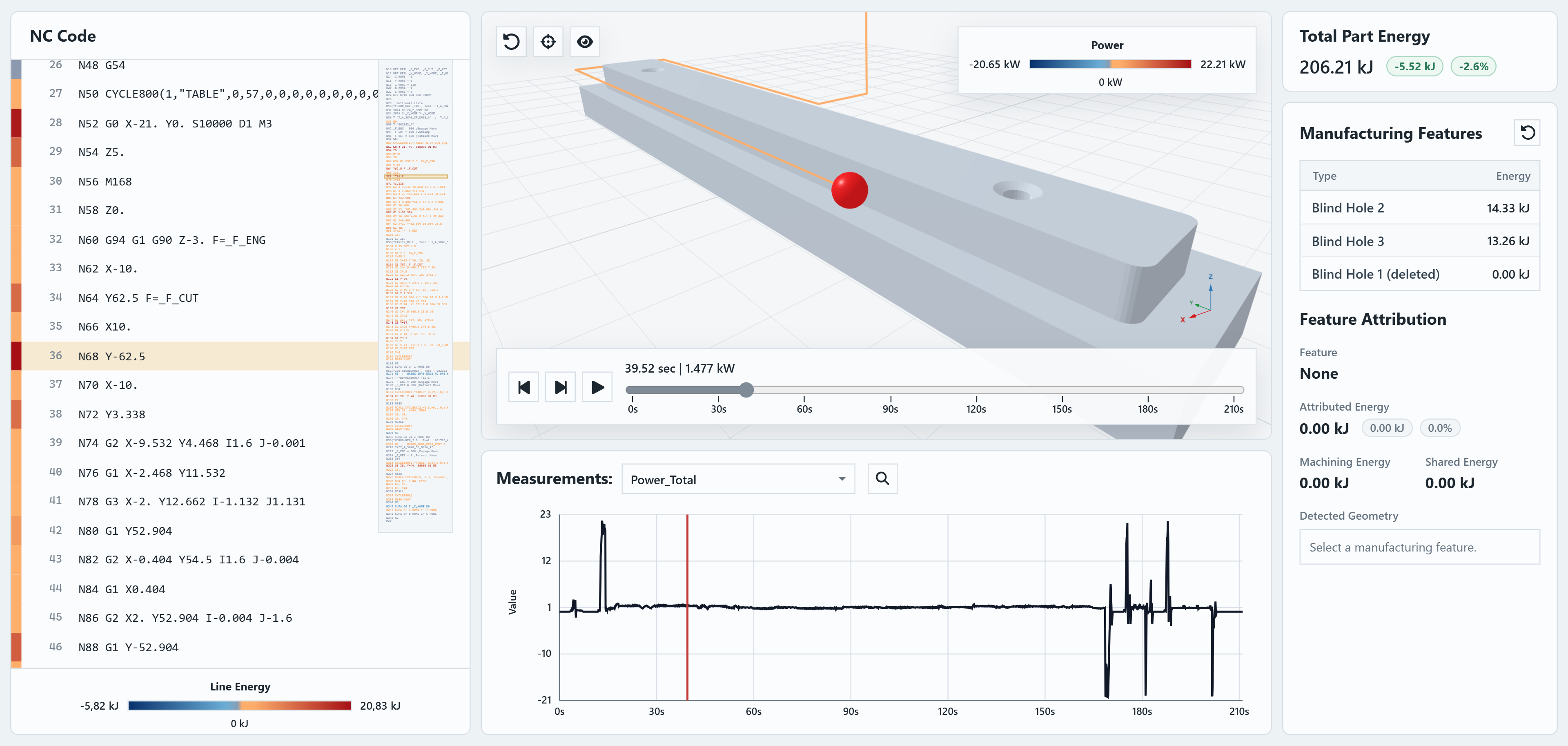
DEXPRO brings these data sources together in a coordinated visual interface. The NC program is displayed line by line and augmented with the energy consumed during the execution of each instruction, helping users identify operations associated with higher energy demand. A compact overview of the NC program provides additional context and supports navigation through large programs. In parallel, a 3D view combines the part geometry with the executed toolpath, allowing users to see where machining takes place and how instantaneous machine power changes along the toolpath. Temporal views show recorded machine measurements over time and support the inspection of individual signals and events. All views share a common temporal reference, enabling users to move through the machining process and inspect the corresponding NC instruction, tool position, and machine measurements at any point in time.
Besides the energy-aware analysis of manufacturing data, DEXPRO supports the exploration of design alternatives and their estimated energy implications. The system automatically identifies manufacturing features from the CAD model and links them to the corresponding machining operations and measured energy consumption. For selected feature types, geometric properties can then be modified, with updated estimates providing immediate feedback on how the changes may affect energy demand. In this way, DEXPRO combines the analysis of an existing production run with interactive what-if analysis of alternative design decisions and their potential impact on manufacturing energy consumption.